⚡ Quick Answer — Verified by SMC Aesthetics Surgeons
A hair transplant in Karachi costs PKR 120,000–300,000+ depending on graft count (1,500–5,000+ grafts) and technique (ICE-FUE, DHI, or Sapphire FUE). PMDC-certified surgeons at SMC Aesthetics achieve a 97%+ graft survival rate. Full, permanent results appear in 9–12 months. Free trichoscopy consultation is available at our DHA and Baldia branches.
If you are reading this, you are probably staring in the mirror watching your hairline recede — and wondering if a hair transplant in Karachi is actually worth it. You have questions. You have seen the Instagram clinics promising "unlimited grafts" for PKR 50,000. You do not know who to trust.
This guide was written by the surgical team at SMC Aesthetics — PMDC-registered hair restoration surgeons who have been performing ICE-FUE, DHI, and Sapphire FUE procedures in Karachi for over a decade. We have intentionally made this the most complete, honest, and medically accurate guide available in Pakistan.
By the end, you will know exactly which technique suits your baldness stage, what a realistic cost breakdown looks like in 2026, how to identify a dangerous clinic, and what to expect month-by-month after your procedure.
1. What is a Hair Transplant? (2026 Medical Definition)
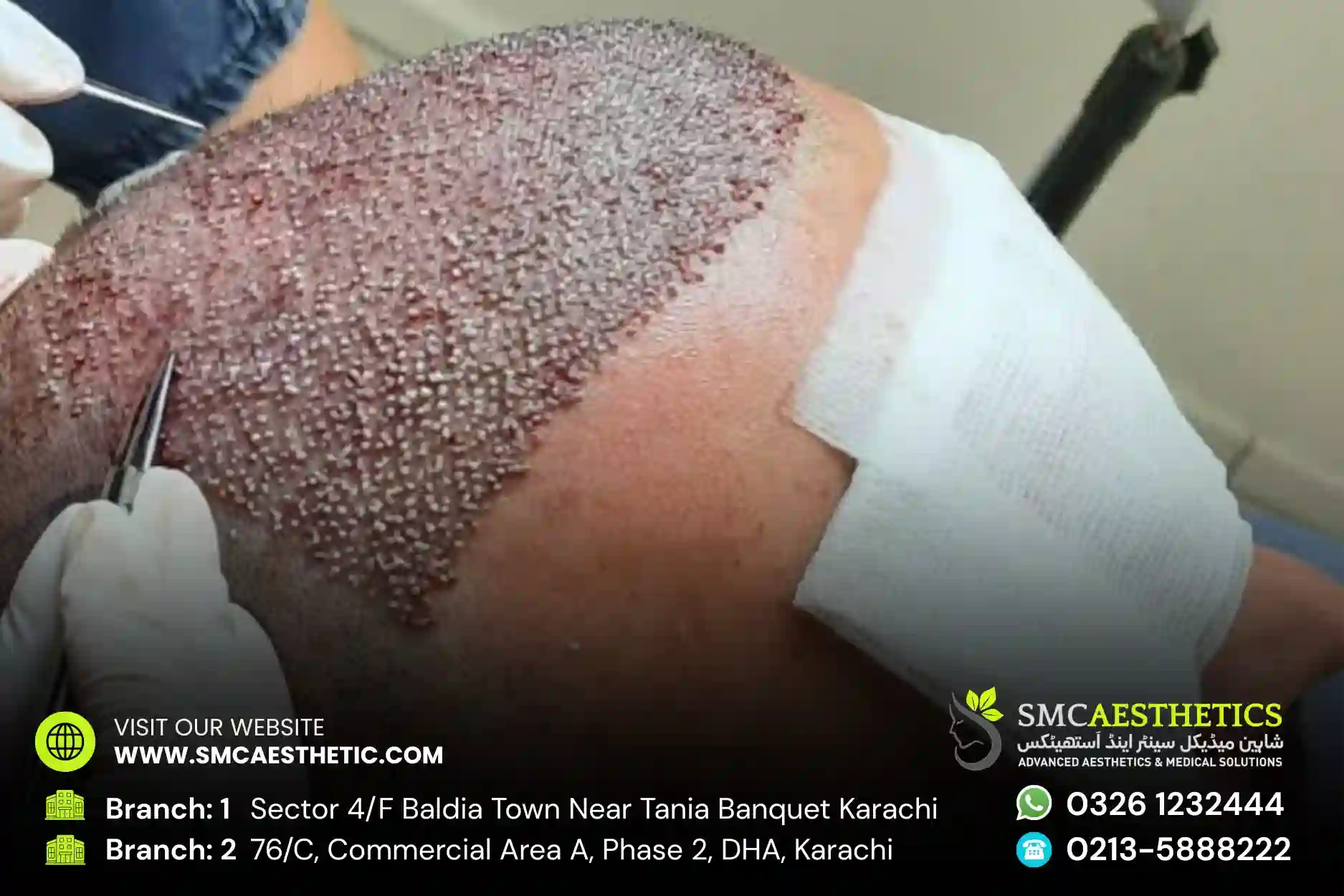
A hair transplant is a minimally invasive surgical procedure that permanently relocates DHT-resistant hair follicles from your donor zone (the back and sides of your scalp, where hair is genetically programmed to last a lifetime) into bald or thinning areas.
The critical word here is DHT-resistant. DHT (Dihydrotestosterone) is the hormone responsible for male pattern baldness. The follicles at the back of your head do not respond to DHT — which means once transplanted, they will continue growing for the rest of your life, even in a previously bald area.
🔬 Medical Fact: A hair transplant does not create new hair — it strategically relocates existing permanent hair. The density you can achieve is directly limited by your donor zone's graft supply. Any clinic claiming "unlimited hair" is lying.
Why is Pakistan's Hair Transplant Industry Growing So Fast?
Pakistan — and Karachi in particular — has seen a surge in hair transplant demand for two reasons. First, South Asian men experience a significantly higher rate of male pattern baldness than the global average, with many Karachi men showing signs of Norwood Stage 3–4 by their early 30s. Second, the cost of a hair transplant in Karachi is 60–80% lower than equivalent procedures in Dubai, the UK, or the USA, making Pakistan one of the most cost-effective destinations for hair restoration in Asia.
2. ICE-FUE vs DHI vs Sapphire FUE vs FUT — Detailed Comparison
The four primary hair transplant techniques available in Karachi are not interchangeable — each has specific advantages depending on your baldness pattern, desired density, and recovery preferences.
⭐ ICE-FUE — The Gold Standard (SMC Aesthetics Specialty)
ICE-FUE (Implantation by Controlled Extraction) is the most advanced FUE protocol available. The key differentiator is graft preservation: extracted follicles are immediately transferred into a chilled, ATP-enriched bio-solution — the same organ-preservation grade used in kidney and liver transplants. This dramatically reduces cellular metabolism during the "out-of-body" time, extending follicle viability from under 2 hours to over 6 hours.
Result: 97%+ graft survival rate vs 80–85% industry average with room-temperature saline storage.
- ✅ No linear scar (micro-dot scars only, hidden in donor hair)
- ✅ 97%+ graft survival — highest available in Karachi
- ✅ Suitable for 1,500–5,500+ graft sessions
- ✅ Natural-looking density with proper angle/direction control
- ⚠️ Requires full donor area shaving
DHI — Direct Hair Implantation (Choi Pen)
DHI uses a hollow Choi implanter pen to simultaneously create the incision and insert the graft in a single motion — skipping the separate "channel creation" step of standard FUE. This means less handling of each graft, faster implantation time, and theoretically higher density packing.
Best for: Hairline reconstruction, patients who cannot shave their heads (no-shave DHI), female hair transplants, and beard/eyebrow restoration.
- ✅ Precise angle, direction, and depth control (natural hairline)
- ✅ No-shave option available for women and executives
- ✅ Faster recovery — return to work in 5–7 days
- ⚠️ Higher cost per graft (specialised Choi pen equipment)
- ⚠️ Fewer grafts per session vs standard FUE
Sapphire FUE — Maximum Density Packing
Sapphire FUE replaces the standard steel blade with a mono-crystal sapphire stone blade to create the recipient incisions. The sapphire blade creates a V-shaped incision that is finer, more precise, and causes 40% less tissue trauma than steel blades. This allows surgeons to pack grafts closer together, achieving higher density in a smaller area.
- ✅ Higher follicle density per cm² than standard FUE
- ✅ Faster scalp healing (less tissue damage)
- ✅ More natural growth angle from V-shaped incision
- ✅ Reduced risk of post-op infection
- ⚠️ Sapphire blades are single-use and add to cost
FUT (Strip Method) — Maximum Graft Yield
FUT (Follicular Unit Transplantation) extracts a strip of scalp tissue from the donor area, which is then dissected under microscope into individual follicular units. FUT yields 20–30% more grafts per session than FUE from the same donor area — making it the best option for Norwood Stage 6–7 patients who need maximum coverage in a single session.
- ✅ Highest graft count per session (5,000–7,000+ possible)
- ✅ Lower graft transection rate than FUE
- ✅ Preserves donor area for future FUE sessions
- ⚠️ Linear scar at the back of the head (hidden by hair ≥1cm)
- ⚠️ Longer recovery: 10–14 days
- ⚠️ Not suitable for patients who wear very short hair
| Technique | Graft Survival | Scar | Best For | Recovery |
|---|---|---|---|---|
| ICE-FUE ⭐ | 97%+ | Micro-dots only | Moderate–advanced baldness | 7–10 days |
| Sapphire FUE | 95%+ | Micro-dots only | High density packing | 5–8 days |
| DHI (Choi Pen) | 95%+ | Micro-dots only | Hairline, women, no-shave | 5–7 days |
| FUT Strip | 90%+ | Linear (hidden) | Advanced baldness NW6–7 | 10–14 days |
3. Hair Transplant Cost in Karachi 2026 — Full Graft-Based Price Table
The single biggest variable in hair transplant cost in Karachi is the number of grafts you need — which is determined by the extent of your baldness (Norwood Scale stage), your desired coverage area, and your donor hair density. Here is a complete, realistic price breakdown for 2026:
⚠ Warning — The "Unlimited Grafts" Scam: Several clinics in Karachi advertise PKR 40,000–80,000 "unlimited graft" packages. A human donor area is finite. Attempting to extract thousands of extra grafts beyond your donor capacity causes permanent scalp scarring, follicle death, and a depleted donor area — making future correction impossible. Always demand per-graft pricing in writing before surgery.
| Coverage Area | Grafts Required | SMC Aesthetics Price (PKR) | Recommended Technique |
|---|---|---|---|
| Hairline Only / Temples | 1,500 – 2,000 | Rs. 90,000 – 130,000 | DHI (Choi Pen) |
| Frontal Zone (NW 2–3) | 2,000 – 3,000 | Rs. 120,000 – 170,000 | ICE-FUE / Sapphire FUE |
| Front to Mid-Scalp (NW 3–4) | 3,000 – 4,000 | Rs. 160,000 – 220,000 | ICE-FUE |
| Front + Crown (NW 4–5) | 4,000 – 5,000 | Rs. 210,000 – 270,000 | ICE-FUE + DHI Combo |
| Full Scalp Coverage (NW 5–7) | 5,000 – 5,500+ | Rs. 250,000 – 300,000+ | ICE-FUE or FUT |
| Beard Transplant | 800 – 1,800 | Rs. 70,000 – 120,000 | DHI |
| Eyebrow Transplant | 300 – 700 | Rs. 50,000 – 90,000 | DHI |
*2026 pricing at SMC Aesthetics. Package includes pre-op bloodwork review, local anaesthesia, ICE graft preservation, full surgical procedure, a post-op medication kit (saline spray, antibiotics, mild shampoo), and clinic head-wash on Day 2. Exact cost confirmed in writing at free trichoscopy consultation.
What Factors Change the Final Price?
- Number of grafts: The primary cost driver — more baldness = more grafts = higher price.
- Hair characteristics: Coarse, grey, or curly hair provides more visual coverage per graft than fine, dark, straight hair — affecting total session count.
- Technique selected: DHI costs more per graft than standard FUE due to the Choi pen equipment; Sapphire blades add a premium for the single-use crystal blades.
- Surgeon experience: Junior technicians performing procedures is why you see cheap packages. Senior PMDC-registered surgeons charge more — and deliver infinitely better results.
- Clinic infrastructure: ISO-standard sterilisation, ICE preservation units, and Choi implanter inventory all cost more than basic setups. This is reflected in the price.
4. Who is a Good Candidate? — Norwood & Ludwig Scale Guide
Not every person experiencing hair loss is a surgical candidate. Before recommending any procedure, our PMDC surgeons conduct a detailed diagnostic workup: trichoscopy scalp scan, blood panel (ferritin, thyroid TSH/T3/T4, vitamin D, vitamin B12, DHT levels), and donor density assessment.
✅ Ideal Candidates for Hair Transplant in Karachi
- Men with Norwood Scale Stage 2–6 and stable, established hair loss pattern
- Women with Ludwig Scale Stage 1–2 female pattern thinning (DHI recommended)
- Healthy donor area at back/sides with adequate follicle density (confirmed by trichoscopy)
- Age 22+ with hair loss that has stabilised for at least 12 months
- Patients seeking beard, eyebrow, or moustache restoration
- Individuals seeking corrective surgery after a failed procedure from another clinic
- Those physically healthy without uncontrolled systemic disease
❌ Less Ideal / Not Currently Suitable
- Active Alopecia Areata — autoimmune hair loss must be medically controlled first; transplantation into active disease zones will fail
- Severely depleted donor area (diffuse unpatterned alopecia) — insufficient graft supply
- Uncontrolled Type 2 diabetes (HbA1c above 7.5%) — wound healing compromised
- Active thyroid disorder (unmedicated hypothyroidism or hyperthyroidism)
- Heavy smokers unable to stop for 2 weeks before and after surgery
- Patients under 21 with still-progressing hairline (risk of operating in a zone that will later lose its native hair)
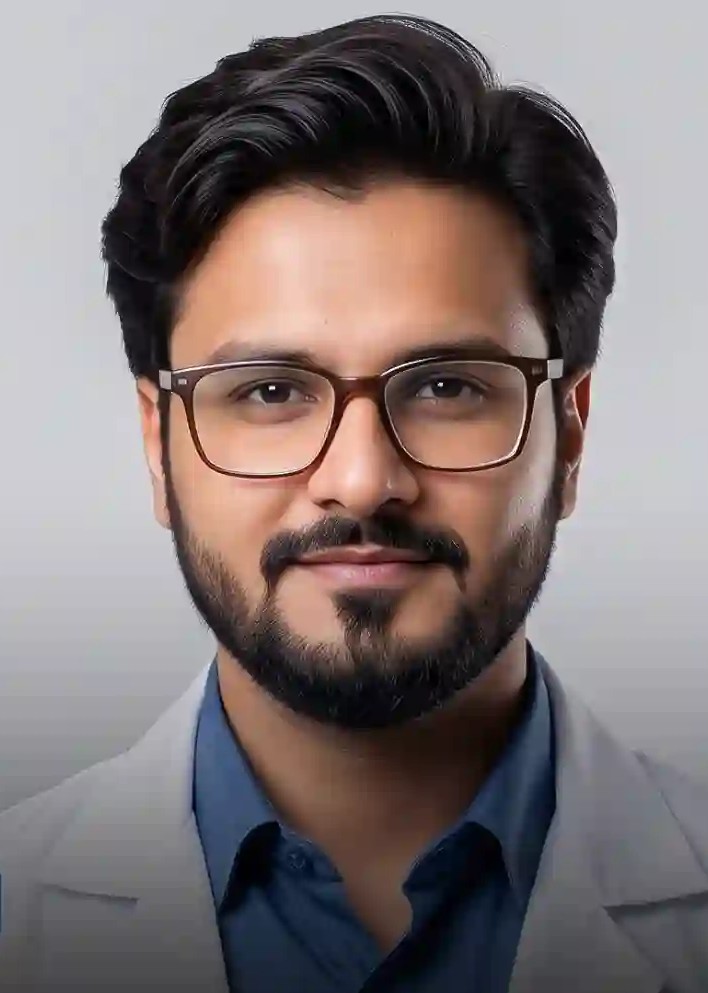
💡 Pro Tip from Dr. Mateen: "The most common mistake is operating too early. A 20-year-old who transplants his hairline may have native hair behind the transplanted zone fall out at age 28 — leaving an island of transplanted hair surrounded by baldness. Wait. Stabilise. Plan for the long game."
5. The Complete Hair Transplant Process at SMC Aesthetics — Step by Step
We believe in 100% transparency. Here is exactly what happens from your first call to your 12-month follow-up:
Free Trichoscopy Consultation
Microscopic trichoscopy scan of your scalp, donor density assessment, Norwood staging, blood panel analysis, personalised hairline design preview, and a written graft-based quote. Zero charge. No pressure.
Pre-Surgery Medical Clearance
Required bloodwork: CBC, PT/APTT, HBS Antigen, Anti-HCV, HIV. ECG required for patients above 40 years. Take 1mg Augmentin the day before surgery. Light breakfast on surgery morning. No tea, coffee, or smoking 7 days prior.
Hairline Design & Marking
Using facial calipers and a laser level, your PMDC surgeon draws your new hairline, customised to your facial proportions, forehead width, and the natural hairline expected for your age. You approve the design before any incision begins.
Local Anaesthesia (Virtually Painless)
Local anaesthesia is administered to both the donor and recipient areas using ultra-fine vibratory needles. Most patients describe the needle sensation as a mild pinch lasting 2–3 minutes. The rest of the procedure — which lasts 6–10 hours — is completely painless. Most patients watch Netflix or fall asleep.
ICE-FUE Graft Extraction
You lie face-down. The surgeon uses a 0.7–0.9mm motorised micro-punch to extract each follicular unit individually. Each extracted graft is immediately transferred into our chilled ATP bio-solution (ICE protocol) — maintaining follicle viability at 97%+.
Graft Implantation (Sapphire / DHI)
Seated upright, the surgeon meticulously implants each graft at the precise angle, direction, and depth to perfectly replicate natural hair growth patterns. Every graft is placed by the PMDC surgeon — not by a technician.
Post-Op Care Kit & Day-2 Head Wash
You leave with a full care kit: saline spray, antibiotic course, gentle baby shampoo, and a sleeping support pillow. Return to clinic on Day 2 for your supervised first head wash. Follow-up appointments at 1, 3, 6, and 12 months.
6. Your 12-Month Hair Transplant Growth Timeline
The most common cause of patient anxiety after surgery is not understanding the growth timeline. Here is exactly what happens — month by month — so you never panic unnecessarily:
| Timeframe | What Happens | % Final Result |
|---|---|---|
| Days 1–3 | Mild forehead swelling (peaks Day 2, then fades). Sleep at 45°. Avoid touching grafts. | — |
| Days 4–10 | Scabs form and fall off. By Day 10 scalp looks shaved. Return to office work. | — |
| Weeks 3–6 | Shock Loss — DO NOT PANIC. Transplanted hairs shed. Root remains alive below skin. This is 100% normal. | 0% |
| Months 3–4 | New fine hair begins emerging. First visible signs of new hairline. PRP booster recommended. | 20–30% |
| Months 5–6 | Hair thickens and darkens. Family begins to notice. Texture still thin but density visible. | 50% |
| Months 7–9 | Rapid density growth phase. Most patients are satisfied by this point. Compliments begin. | 70–80% |
| Month 12 ⭐ | Final result. Full density, mature, permanently established hair. Cut, dye, style normally — for life. | 100% |
7. How to Choose the Best Hair Transplant Clinic in Karachi
Karachi has 100+ clinics offering hair transplants. Most are run by non-PMDC technicians using outdated equipment. Here is a practical checklist for evaluating any clinic before you commit:
- PMDC Registration: Ask for the surgeon's PMDC registration number. Verify it on the PMDC official website. If the clinic hesitates, walk out.
- Per-Graft Written Pricing: Demand a written estimate specifying the graft count, price per graft, and total cost before any deposit.
- Surgeon vs Technician: Ask directly: "Will the surgeon perform my extraction and implantation, or will a technician?" A PMDC surgeon must perform all critical surgical steps.
- Graft Preservation Method: Ask: "How do you store extracted grafts?" The answer should be chilled solution. Room-temperature saline is 2015-era practice.
- Sterilisation Protocol: Single-use micro-punches for every patient. Autoclave certificates available on request. Zero cross-contamination.
- Before & After Verification: Ask to see unedited photos of their own patients — not stock images. Ask for timestamps and patient consent records.
- Post-Op Support: Will you have direct surgeon access after surgery? What is the follow-up schedule? What happens if you experience unexpected complications?
8. 5 Red Flags That Expose a Dangerous Hair Transplant Clinic in Karachi
🚨 Red Flag #1 — "Unlimited Grafts" or Flat Package Price: Biologically impossible and medically dangerous. A legitimate clinic charges per verified graft count confirmed by trichoscopy.
🚨 Red Flag #2 — Price Under PKR 70,000 for Any Meaningful Session: At this price point, corners are being cut on sterilisation, surgeon qualifications, or graft preservation. The risk to your health and appearance is not worth the saving.
🚨 Red Flag #3 — No PMDC Surgeon on Premises: If the "doctor" performing your surgery cannot show you a PMDC registration number, they are not legally qualified to perform surgery in Pakistan.
🚨 Red Flag #4 — Only Stock Images in "Before & After" Gallery: Legitimate clinics photograph their own patients. Ask to see timestamped, original photos of patients treated at that specific clinic.
🚨 Red Flag #5 — Pressure to Book On the Same Day: A reputable surgeon will encourage you to take time, review options, and get a second opinion. Aggressive same-day booking pressure is a hallmark of a commission-driven sales operation, not a medical clinic.
9. Non-Surgical Alternatives to Hair Transplant in Karachi
Surgery is not always the first step. For patients with early-stage hair loss, medical instability, or insufficient donor supply, SMC Aesthetics offers three proven non-surgical options:
PRP Hair Treatment (Platelet-Rich Plasma)
Your own blood is drawn, centrifuged to concentrate the platelets, and injected into the scalp to stimulate dormant follicles and slow active shedding. A course of 4–6 sessions over 4–6 months is recommended. Learn more about PRP Hair Treatment at SMC Aesthetics →
PRGF — Plasma Rich in Growth Factors
An advanced version of PRP that uses a modified centrifugation process to concentrate a higher volume of fibroblast growth factors (FGF) and insulin-like growth factor (IGF-1) — achieving superior follicle stimulation results compared to standard PRP. Strongly recommended as a post-FUE booster therapy at Months 3, 6, and 9.
50 Billion Exosomes Therapy
Stem-cell-derived nano-vesicles (exosomes) are injected into the scalp, carrying growth signal molecules that reactivate weakened follicles and dramatically improve transplant graft survival and density. This is the newest and most advanced non-surgical hair regeneration option available at SMC Aesthetics in Karachi.
📚 Related Reading from SMC Aesthetics
Ready to Start?
Book Your Free Trichoscopy Scan
Get a microscopic scalp analysis, exact graft count, and a written cost estimate from our PMDC-certified surgeons — 100% free, zero pressure.
DHA Phase 2 & Baldia Branches · Mon–Sat 10AM–9PM



Discussion (0)