Home > Blog
> Hair Transplant Turkey Vs Karachi: Hair Transplant in Turkey vs. Karachi: Which Is Actually the B...
Hair Transplant Turkey Vs Karachi: Hair Transplant in Turkey vs. Karachi: Which Is Actually the B...
By Dr. Mateen Ahmed
Aesthetician
•August 30, 2026•14 min read
Hair Transplant Turkey Vs Karachi is a critical topic for patients seeking clinical aesthetics.
Quick Answer: The choice between a hair transplant in Turkey versus Karachi comes down to the operational model. Turkey offers $2,000–$4,500 all-inclusive travel packages, but many are technician-led "hair mills" with zero in-person aftercare. A premium surgeon-led clinic in Karachi offers equivalent or superior clinical standards (like DHI and Sapphire FUE), direct accountability to a PMDC-registered doctor, and crucial local post-op care, often at a lower total cost.
Dr. Mateen Ahmed (SMC Aesthetics, Karachi) — Choosing a local surgeon-led clinic ensures the doctor actually performs your procedure, rather than delegating to technicians.
The Appeal of Turkey: Marketing vs. Medical Reality
If you have researched hair transplants online, your social media feeds are likely flooded with advertisements for clinics in Istanbul. Turkey has successfully positioned itself as the global capital of hair restoration, performing thousands of procedures every week. The appeal is obvious: highly polished marketing, the promise of a "VIP" experience with luxury hotel stays and airport transfers, and prices that are significantly cheaper than clinics in the UK, USA, or Europe.
However, for a patient based in Pakistan, the equation is entirely different. You are not comparing Turkey's prices to a $15,000 procedure in New York. You are comparing Turkey to the rapidly advancing, highly competitive medical sector in cities like Karachi, Lahore, and Islamabad, where top-tier surgeons offer world-class procedures at local economic rates.
More importantly, the Turkish hair transplant industry has a well-documented dark side: the rise of the "hair mill." A hair mill is a clinic that prioritises volume over patient care, running 10 to 30 surgeries simultaneously on the same day. While the clinic may be owned by a doctor (whose name is on the door), the doctor acts merely as a greeter. The actual surgery — the extraction of your precious donor hair and the creation of your new hairline — is performed entirely by unlicensed technicians.
The Most Critical Factor: Surgeon-Led vs. Technician-Led Clinics
When comparing any two clinics — whether they are separated by 3,000 miles or 3 streets — the geographic location matters far less than the operational model. This is the single most important concept to understand before booking a procedure.
The Technician-Led Model (Common in Turkey)
In this model, technicians do the heavy lifting. This allows a clinic to operate at massive scale, drastically lowering the price. The risks, however, are severe:
Overharvesting: Technicians are often paid by the graft or by the patient, incentivising speed. Rushed extraction leads to "strip mining" the donor area, leaving permanent, visible bald patches on the back of the head.
Poor Hairline Design: Creating a natural hairline is an art that requires an understanding of facial symmetry, age-appropriate recession, and natural follicular gradients. Technicians often create low, straight, "wall-like" hairlines that look artificial.
Incorrect Graft Angles: If recipient channels are made at the wrong angle, the transplanted hair will stick straight up instead of lying flat against the scalp.
Zero Accountability: If the result is poor, it is almost impossible to identify who actually performed the surgery, and the clinic will often blame the patient's post-op care.
The Surgeon-Led Model (Available in Karachi)
In a surgeon-led clinic like SMC Aesthetics in Karachi, the physician is the primary operator. Dr. Mateen Ahmed personally handles the critical phases of the surgery:
Pre-surgical Trichoscopy: Scientific mapping of the donor area to ensure safe extraction limits.
Hairline Design: Drawn by the doctor, in collaboration with the patient, before any anaesthesia is given.
Channel Creation / DHI Implantation: The most crucial step for natural results. The doctor determines the exact angle, depth, and density of every single graft.
A surgeon-led clinic can only perform 1 to 2 surgeries per day. It is a boutique, highly personalised medical service, not a factory assembly line.
The True Cost Comparison (2026 Breakdown)
Let's look at the actual numbers. Turkish clinics often advertise prices that seem comparable to premium Pakistani clinics, but the "hidden" costs of medical tourism quickly add up.
Cost Category
Average in Turkey (Technician-led Package)
Premium Surgeon-Led in Karachi
The Procedure (2,500 - 3,500 Grafts)
$1,500 – $2,500 (approx. PKR 420,000 – 700,000)
PKR 150,000 – 350,000 (varies by technique e.g. DHI vs FUE)
Flights (Return from Karachi)
$500 – $700 (approx. PKR 140,000 – 196,000)
PKR 0
Visa & Travel Insurance
$100 (approx. PKR 28,000)
PKR 0
Accommodation
Often included for 2 nights, but extra nights cost $100+/night
PKR 0 (Sleep in your own bed)
Estimated Total Investment
PKR 588,000 – 924,000+
PKR 150,000 – 350,000
The financial reality is clear: For a patient in Pakistan, travelling to Turkey means paying 2 to 3 times more for a procedure that is likely performed by an unlicensed technician. To get a true surgeon-led procedure in Turkey (where a top-tier doctor does the work), prices jump to $4,000–$8,000 (PKR 1.1 Million – 2.2 Million).
There is a secondary, often ignored financial risk when choosing a budget clinic abroad: the cost of fixing a bad result. At SMC Aesthetics, a significant portion of our practice involves corrective hair transplant surgery for patients who travelled to Turkey for a cheap package, only to return with a disfigured hairline or an overharvested donor area.
When this happens, the patient is forced to pay for a second surgery. Because corrective surgery is technically more difficult—requiring the extraction of poorly placed plugs and careful camouflaging of scar tissue with a now-depleted donor supply—it is almost always more expensive than a primary procedure. A patient who tried to save PKR 100,000 by going to a Turkish hair mill often ends up spending an additional PKR 300,000+ locally to repair the damage. The cheapest hair transplant is the one you only have to do once.
Why Local Aftercare Often Determines Graft Survival
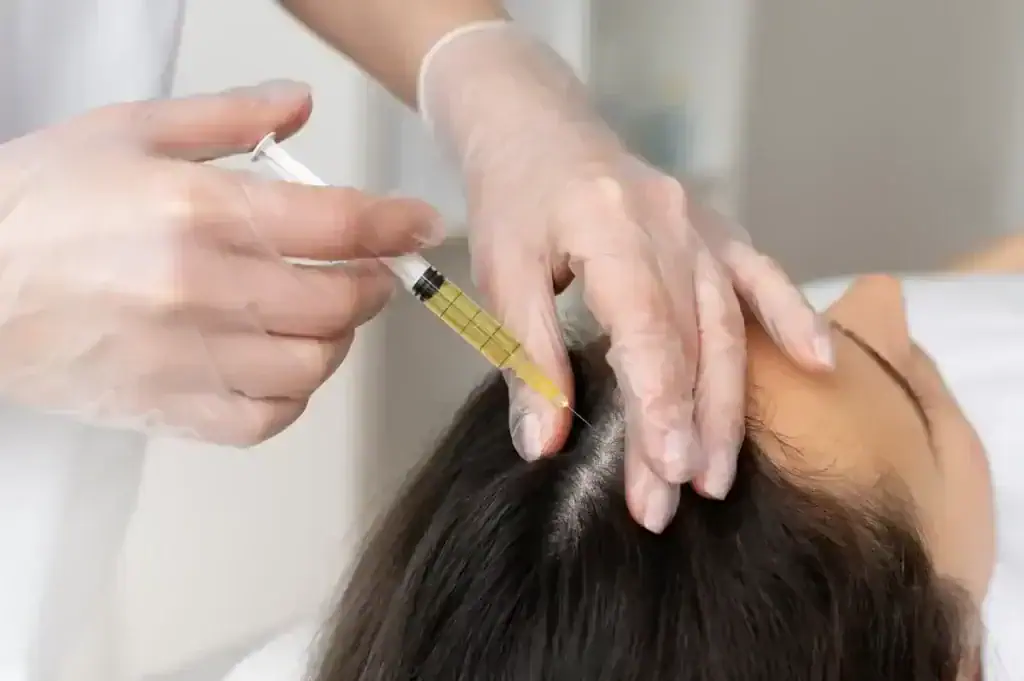
A hair transplant does not end when you leave the operating table. The first 14 days post-surgery are critical. The newly implanted grafts are incredibly fragile and rely entirely on the surrounding tissue to establish a new blood supply. During this period, complications can and do arise:
Folliculitis (infection of the hair follicles)
Severe swelling (edema) moving down the face
Necrosis (tissue death) due to poor blood flow
Accidental dislodging of grafts
If you are in Karachi and you experience any of these issues, you simply drive back to the clinic. At SMC Aesthetics, our patients receive complimentary in-person check-ups, and the first critical hair wash is performed by our clinical staff. If an infection begins, Dr. Mateen can prescribe targeted antibiotics immediately, saving the grafts.
If you had your surgery in Turkey, you are dealing with these issues over WhatsApp. Sending blurry photos to a "patient coordinator" (who is usually a salesperson, not a medical professional) while dealing with a post-surgical complication is highly stressful. If you require medical intervention, you will have to find a local doctor in Karachi willing to clean up another clinic's mess — and they will charge you for it.
Where a Turkey Trip Actually Makes Sense
To provide a balanced view, there are specific scenarios where travelling to Turkey might be the right decision:
You are already based in Europe or the UK. The travel distance and flight costs are minimal, making the financial proposition much stronger compared to £8,000 UK clinic prices.
You have a massive Norwood 6/7 baldness requiring a "mega-session". Some specialized Turkish clinics excel at extracting 5,000+ grafts over two consecutive days, combining scalp hair with beard and chest hair (Body Hair Transplant - BHT). While local clinics can do this, a few top-tier Turkish surgeons have built their entire practice around these complex, extreme-high-volume cases.
You have a budget of $5,000+ and want a world-renowned European surgeon. If you bypass the cheap hair mills and book with an internationally board-certified (ISHRS) Turkish master surgeon, you will get an exceptional result. Just be prepared to pay a premium.
The Danger of the "WhatsApp Consultation"
One of the most significant, yet rarely discussed, differences between booking a procedure in Turkey versus Karachi is how the initial medical assessment is conducted.
The Turkish Model: Remote Guesswork
When booking a package in Turkey, the consultation is almost entirely remote. You send a few photos of your head over WhatsApp to a "patient coordinator." This coordinator—who is typically a commissioned salesperson, not a doctor—looks at the photos, estimates a graft count, and gives you a price. This approach has critical medical flaws:
No Donor Area Assessment: Photos cannot accurately measure donor density (how many follicular units you have per square centimetre) or hair calibre (the thickness of individual hair shafts). These two metrics are the foundation of any ethical surgical plan.
Misdiagnosed Scalp Conditions: A photo cannot reveal active scalp inflammation, seborrheic dermatitis, or early-stage alopecia areata. Operating on an inflamed scalp guarantees poor graft survival, but a remote coordinator will often miss these contraindications.
The "Bait and Switch": Many patients arrive in Istanbul only to be told they need more grafts than originally quoted, increasing the price at the last minute when the patient is already committed.
The Karachi Model: Clinical Trichoscopy
At SMC Aesthetics in Karachi, the consultation is a physical, clinical examination conducted by Dr. Mateen Ahmed. We use digital trichoscopy (a specialized scalp microscope) to perform a comprehensive audit of your scalp.
This allows us to:
Measure exact donor density mathematically, ensuring we never overharvest.
Assess the miniaturization rate of existing hair in the recipient area, which dictates whether you need preventative treatments (like PRP) alongside the transplant.
Physically examine the scalp for contraindications.
Draw the hairline directly on your face, taking into account your facial bone structure, age, and personal preferences, allowing you to see the exact plan before committing to surgery.
Regulation, Accountability, and Legal Recourse
A surgical procedure is a serious medical undertaking. When you have surgery in your home country, you are protected by national medical regulations. In Pakistan, the PMDC (Pakistan Medical and Dental Council) sets strict guidelines for who can perform surgical procedures. If a clinic in Karachi engages in severe medical malpractice, you have a clear, accessible path for legal and professional recourse.
When you fly to Turkey as a medical tourist, you are navigating a foreign legal system in a language you likely do not speak. If a technician-led hair mill severely damages your donor area or leaves you with a disfiguring hairline, your options for holding them accountable are virtually non-existent. You cannot easily file a malpractice lawsuit or report them to the local medical board from thousands of miles away. The clinic knows this, which is why foreign patients in high-volume mills are inherently more vulnerable to substandard care than local patients.
The Physical Toll of Medical Travel Post-Surgery
The marketing brochures for Turkish hair transplants often show smiling patients exploring the Grand Bazaar or taking boat rides on the Bosphorus. The clinical reality of the days immediately following a hair transplant is very different.
A hair transplant involves thousands of tiny incisions in your scalp. Following the procedure, you will experience:
Swelling that often travels down the forehead to the eyes.
A heavily bandaged donor area that seeps fluid for the first 24-48 hours.
Extreme fragility in the recipient area; even bumping your head slightly getting into a car can permanently dislodge grafts.
Navigating an international airport—dealing with luggage, security lines, cabin pressure changes, and the dry, recycled air of a commercial flight—is the absolute worst environment for fresh surgical wounds. The risk of infection or mechanical damage to the grafts is significantly amplified during travel.
Compare this to having the procedure in Karachi: you leave the clinic, step into a car, and are recovering in the comfort and sterile environment of your own bed within an hour. You have control over your diet, your environment, and immediate access to your surgeon if you have a concern.
The Evolution of Hair Transplant Quality in Karachi
Ten years ago, patients flew to Turkey because local technology lagged behind. Today, that gap has closed entirely. The instruments, protocols, and technologies used in Istanbul are the exact same ones used in premium Karachi clinics.
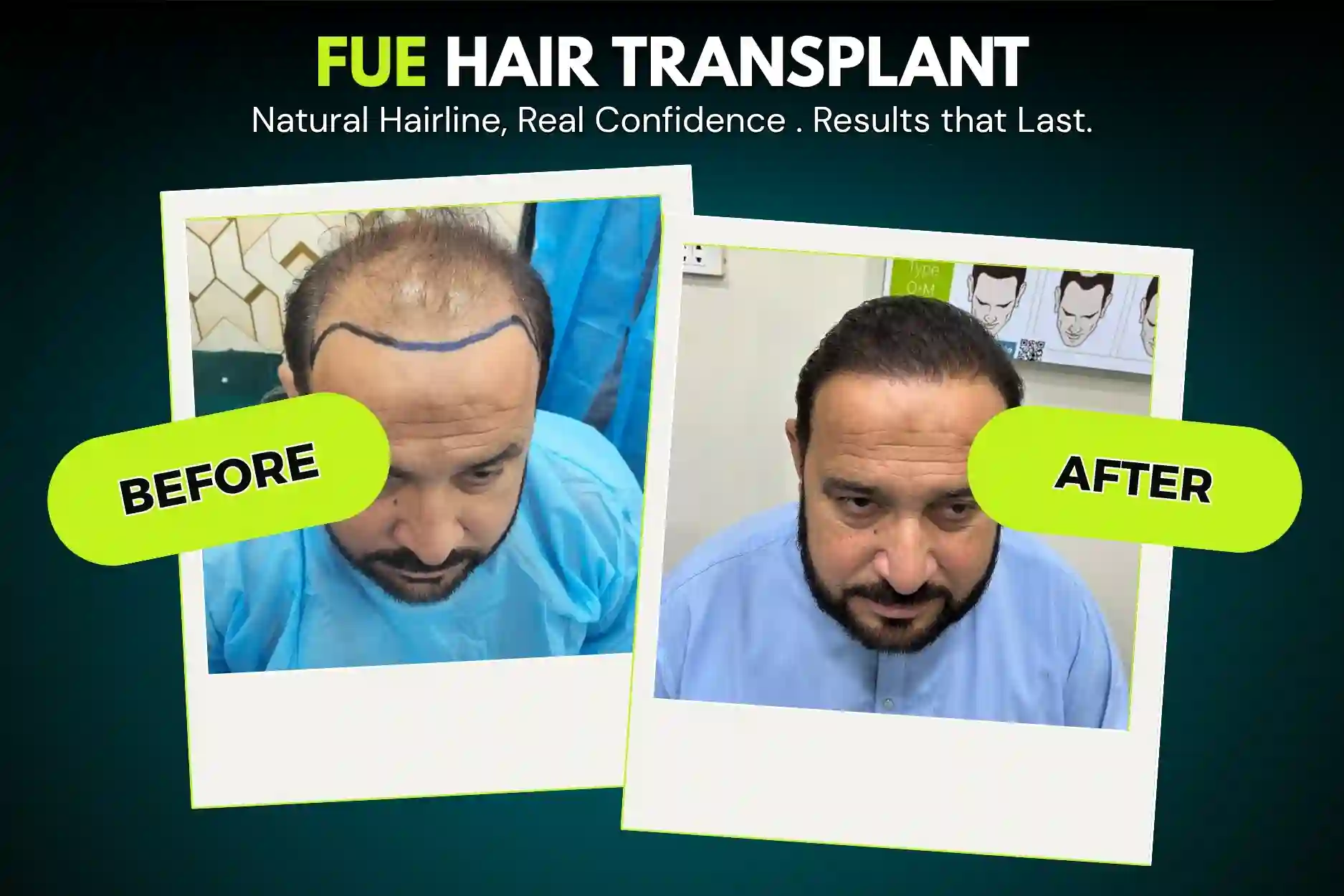
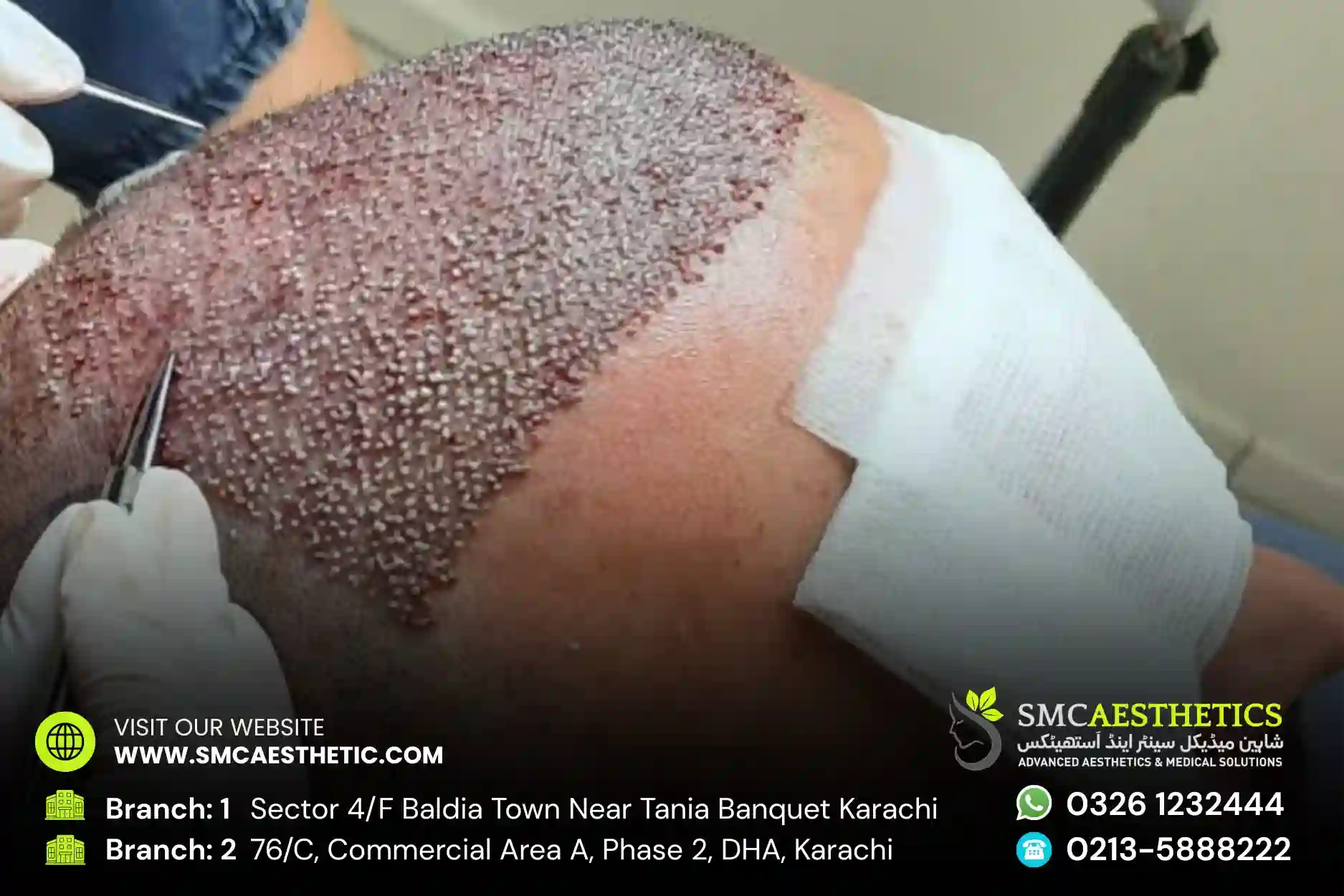
A verifiable local result: FUE Hair Transplant performed at SMC Aesthetics. Local clinics provide the ability to meet the surgeon and see their actual work in person.
DHI (Direct Hair Implantation)
SMC Aesthetics routinely performs DHI procedures using imported Choi Implanter Pens. This allows for maximum density at the hairline without needing to shave the recipient area — identical to the premium DHI packages offered abroad.
Sapphire FUE
Instead of standard steel punches, we use Sapphire blades for recipient channel creation. Sapphire blades are sharper, smoother, and cause significantly less tissue trauma, resulting in faster healing and less post-operative crusting.
Cold Storage ATP Preservation
Perhaps the most significant advancement is how grafts are treated while out of the body. We utilize Cold-Storage ATP (Adenosine Triphosphate) preservation. By suspending the extracted follicles in a chilled, nutrient-rich bio-solution, cellular metabolism is slowed down. This protects the grafts from dehydration and trauma, allowing us to consistently achieve a 97%+ graft survival rate.
How to Vet Clinics in Both Countries
Whether you choose to stay in Karachi or travel abroad, you must protect yourself from unethical practices. Use this checklist when speaking to any clinic:
🚩 Red Flags to Walk Away From
"We can do 6,000 grafts in one session." Over-extracting in a single day severely damages the donor area and compromises graft survival. Safe limits are generally 3,000–4,000 grafts per day.
The consultation is only with a salesperson. If you cannot speak directly to the doctor who will perform the surgery before paying a deposit, do not book.
No mention of post-op care. A clinic that doesn't emphasize aftercare only cares about getting you in and out the door.
Refusal to show close-up hairline photos. High-resolution, zoomable photos of the hairline (with hair pulled back) are the only way to judge a surgeon's artistry. Blur, low lighting, or distant shots are used to hide pluggy work.
The Psychological Impact of Medical Tourism Failures
We must also address the psychological toll that occurs when a medical tourism trip goes wrong. Hair loss itself already causes significant anxiety and depression for many patients. The decision to undergo surgery is often a deeply personal, emotionally charged choice made in the hope of regaining confidence.
When a patient travels abroad, spends their savings, and returns with a botched result—such as a heavily scarred donor area or a highly unnatural, pluggy hairline—the emotional devastation is severe. Because the clinic is in another country, the patient often feels entirely abandoned. There is no one to visit for reassurance, no doctor to examine the scalp, and no clear path to fixing the problem. This isolation compounds the anxiety, leaving patients feeling helpless.
At SMC Aesthetics, we have seen patients who spent years wearing hats indoors to hide the damage caused by foreign "hair mills" before finally seeking corrective surgery. The psychological safety of having your surgeon located in your own city, speaking your language, and available for immediate in-person review is an invaluable part of the recovery process that budget packages simply cannot provide.
Final Verdict
If you are a resident of Pakistan, travelling to Turkey for a budget hair transplant is an unnecessary financial and medical risk. The combination of flights, accommodation, and a technician-led surgery will cost you double what a premium, surgeon-led procedure costs in Karachi.
At SMC Aesthetics, we offer the exact same advanced techniques (DHI, Sapphire FUE, ATP Cold Storage) as top-tier international clinics, but with the irreplaceable safety net of direct accountability, verifiable local results, and immediate, in-person aftercare.
Don't risk your donor hair on a medical tourism package. Book a free consultation and trichoscopy scan with Dr. Mateen Ahmed at our DHA Phase 2 or Baldia branch, and see the difference a surgeon-led approach makes.
Quick Answer: The choice between a hair transplant in Turkey versus Karachi comes down to the operational model. Turkey offers $2,000–$4,500 all-inclusive travel packages, but many are technician-led "hair mills" with zero in-person aftercare. A premium surgeon-led clinic in Karachi offers equivalent or superior clinical standards (like DHI and Sapphire FUE), direct accountability to a PMDC-registered doctor, and crucial local post-op care, often at a lower total cost.
Dr. Mateen Ahmed (SMC Aesthetics, Karachi) — Choosing a local surgeon-led clinic ensures the doctor actually performs your procedure, rather than delegating to technicians.
The Appeal of Turkey: Marketing vs. Medical Reality
If you have researched hair transplants online, your social media feeds are likely flooded with advertisements for clinics in Istanbul. Turkey has successfully positioned itself as the global capital of hair restoration, performing thousands of procedures every week. The appeal is obvious: highly polished marketing, the promise of a "VIP" experience with luxury hotel stays and airport transfers, and prices that are significantly cheaper than clinics in the UK, USA, or Europe.
However, for a patient based in Pakistan, the equation is entirely different. You are not comparing Turkey's prices to a $15,000 procedure in New York. You are comparing Turkey to the rapidly advancing, highly competitive medical sector in cities like Karachi, Lahore, and Islamabad, where top-tier surgeons offer world-class procedures at local economic rates.
More importantly, the Turkish hair transplant industry has a well-documented dark side: the rise of the "hair mill." A hair mill is a clinic that prioritises volume over patient care, running 10 to 30 surgeries simultaneously on the same day. While the clinic may be owned by a doctor (whose name is on the door), the doctor acts merely as a greeter. The actual surgery — the extraction of your precious donor hair and the creation of your new hairline — is performed entirely by unlicensed technicians.
The Most Critical Factor: Surgeon-Led vs. Technician-Led Clinics
When comparing any two clinics — whether they are separated by 3,000 miles or 3 streets — the geographic location matters far less than the operational model. This is the single most important concept to understand before booking a procedure.
The Technician-Led Model (Common in Turkey)
In this model, technicians do the heavy lifting. This allows a clinic to operate at massive scale, drastically lowering the price. The risks, however, are severe:
Overharvesting: Technicians are often paid by the graft or by the patient, incentivising speed. Rushed extraction leads to "strip mining" the donor area, leaving permanent, visible bald patches on the back of the head.
Poor Hairline Design: Creating a natural hairline is an art that requires an understanding of facial symmetry, age-appropriate recession, and natural follicular gradients. Technicians often create low, straight, "wall-like" hairlines that look artificial.
Incorrect Graft Angles: If recipient channels are made at the wrong angle, the transplanted hair will stick straight up instead of lying flat against the scalp.
Zero Accountability: If the result is poor, it is almost impossible to identify who actually performed the surgery, and the clinic will often blame the patient's post-op care.
The Surgeon-Led Model (Available in Karachi)
In a surgeon-led clinic like SMC Aesthetics in Karachi, the physician is the primary operator. Dr. Mateen Ahmed personally handles the critical phases of the surgery:
Pre-surgical Trichoscopy: Scientific mapping of the donor area to ensure safe extraction limits.
Hairline Design: Drawn by the doctor, in collaboration with the patient, before any anaesthesia is given.
Channel Creation / DHI Implantation: The most crucial step for natural results. The doctor determines the exact angle, depth, and density of every single graft.
A surgeon-led clinic can only perform 1 to 2 surgeries per day. It is a boutique, highly personalised medical service, not a factory assembly line.
The True Cost Comparison (2026 Breakdown)
Let's look at the actual numbers. Turkish clinics often advertise prices that seem comparable to premium Pakistani clinics, but the "hidden" costs of medical tourism quickly add up.
Cost Category
Average in Turkey (Technician-led Package)
Premium Surgeon-Led in Karachi
The Procedure (2,500 - 3,500 Grafts)
$1,500 – $2,500 (approx. PKR 420,000 – 700,000)
PKR 150,000 – 350,000 (varies by technique e.g. DHI vs FUE)
Flights (Return from Karachi)
$500 – $700 (approx. PKR 140,000 – 196,000)
PKR 0
Visa & Travel Insurance
$100 (approx. PKR 28,000)
PKR 0
Accommodation
Often included for 2 nights, but extra nights cost $100+/night
PKR 0 (Sleep in your own bed)
Estimated Total Investment
PKR 588,000 – 924,000+
PKR 150,000 – 350,000
The financial reality is clear: For a patient in Pakistan, travelling to Turkey means paying 2 to 3 times more for a procedure that is likely performed by an unlicensed technician. To get a true surgeon-led procedure in Turkey (where a top-tier doctor does the work), prices jump to $4,000–$8,000 (PKR 1.1 Million – 2.2 Million).
There is a secondary, often ignored financial risk when choosing a budget clinic abroad: the cost of fixing a bad result. At SMC Aesthetics, a significant portion of our practice involves corrective hair transplant surgery for patients who travelled to Turkey for a cheap package, only to return with a disfigured hairline or an overharvested donor area.
When this happens, the patient is forced to pay for a second surgery. Because corrective surgery is technically more difficult—requiring the extraction of poorly placed plugs and careful camouflaging of scar tissue with a now-depleted donor supply—it is almost always more expensive than a primary procedure. A patient who tried to save PKR 100,000 by going to a Turkish hair mill often ends up spending an additional PKR 300,000+ locally to repair the damage. The cheapest hair transplant is the one you only have to do once.
Why Local Aftercare Often Determines Graft Survival
A hair transplant does not end when you leave the operating table. The first 14 days post-surgery are critical. The newly implanted grafts are incredibly fragile and rely entirely on the surrounding tissue to establish a new blood supply. During this period, complications can and do arise:
Folliculitis (infection of the hair follicles)
Severe swelling (edema) moving down the face
Necrosis (tissue death) due to poor blood flow
Accidental dislodging of grafts
If you are in Karachi and you experience any of these issues, you simply drive back to the clinic. At SMC Aesthetics, our patients receive complimentary in-person check-ups, and the first critical hair wash is performed by our clinical staff. If an infection begins, Dr. Mateen can prescribe targeted antibiotics immediately, saving the grafts.
If you had your surgery in Turkey, you are dealing with these issues over WhatsApp. Sending blurry photos to a "patient coordinator" (who is usually a salesperson, not a medical professional) while dealing with a post-surgical complication is highly stressful. If you require medical intervention, you will have to find a local doctor in Karachi willing to clean up another clinic's mess — and they will charge you for it.
Where a Turkey Trip Actually Makes Sense
To provide a balanced view, there are specific scenarios where travelling to Turkey might be the right decision:
You are already based in Europe or the UK. The travel distance and flight costs are minimal, making the financial proposition much stronger compared to £8,000 UK clinic prices.
You have a massive Norwood 6/7 baldness requiring a "mega-session". Some specialized Turkish clinics excel at extracting 5,000+ grafts over two consecutive days, combining scalp hair with beard and chest hair (Body Hair Transplant - BHT). While local clinics can do this, a few top-tier Turkish surgeons have built their entire practice around these complex, extreme-high-volume cases.
You have a budget of $5,000+ and want a world-renowned European surgeon. If you bypass the cheap hair mills and book with an internationally board-certified (ISHRS) Turkish master surgeon, you will get an exceptional result. Just be prepared to pay a premium.
The Danger of the "WhatsApp Consultation"
One of the most significant, yet rarely discussed, differences between booking a procedure in Turkey versus Karachi is how the initial medical assessment is conducted.
The Turkish Model: Remote Guesswork
When booking a package in Turkey, the consultation is almost entirely remote. You send a few photos of your head over WhatsApp to a "patient coordinator." This coordinator—who is typically a commissioned salesperson, not a doctor—looks at the photos, estimates a graft count, and gives you a price. This approach has critical medical flaws:
No Donor Area Assessment: Photos cannot accurately measure donor density (how many follicular units you have per square centimetre) or hair calibre (the thickness of individual hair shafts). These two metrics are the foundation of any ethical surgical plan.
Misdiagnosed Scalp Conditions: A photo cannot reveal active scalp inflammation, seborrheic dermatitis, or early-stage alopecia areata. Operating on an inflamed scalp guarantees poor graft survival, but a remote coordinator will often miss these contraindications.
The "Bait and Switch": Many patients arrive in Istanbul only to be told they need more grafts than originally quoted, increasing the price at the last minute when the patient is already committed.
The Karachi Model: Clinical Trichoscopy
At SMC Aesthetics in Karachi, the consultation is a physical, clinical examination conducted by Dr. Mateen Ahmed. We use digital trichoscopy (a specialized scalp microscope) to perform a comprehensive audit of your scalp.
This allows us to:
Measure exact donor density mathematically, ensuring we never overharvest.
Assess the miniaturization rate of existing hair in the recipient area, which dictates whether you need preventative treatments (like PRP) alongside the transplant.
Physically examine the scalp for contraindications.
Draw the hairline directly on your face, taking into account your facial bone structure, age, and personal preferences, allowing you to see the exact plan before committing to surgery.
Regulation, Accountability, and Legal Recourse
A surgical procedure is a serious medical undertaking. When you have surgery in your home country, you are protected by national medical regulations. In Pakistan, the PMDC (Pakistan Medical and Dental Council) sets strict guidelines for who can perform surgical procedures. If a clinic in Karachi engages in severe medical malpractice, you have a clear, accessible path for legal and professional recourse.
When you fly to Turkey as a medical tourist, you are navigating a foreign legal system in a language you likely do not speak. If a technician-led hair mill severely damages your donor area or leaves you with a disfiguring hairline, your options for holding them accountable are virtually non-existent. You cannot easily file a malpractice lawsuit or report them to the local medical board from thousands of miles away. The clinic knows this, which is why foreign patients in high-volume mills are inherently more vulnerable to substandard care than local patients.
The Physical Toll of Medical Travel Post-Surgery
The marketing brochures for Turkish hair transplants often show smiling patients exploring the Grand Bazaar or taking boat rides on the Bosphorus. The clinical reality of the days immediately following a hair transplant is very different.
A hair transplant involves thousands of tiny incisions in your scalp. Following the procedure, you will experience:
Swelling that often travels down the forehead to the eyes.
A heavily bandaged donor area that seeps fluid for the first 24-48 hours.
Extreme fragility in the recipient area; even bumping your head slightly getting into a car can permanently dislodge grafts.
Navigating an international airport—dealing with luggage, security lines, cabin pressure changes, and the dry, recycled air of a commercial flight—is the absolute worst environment for fresh surgical wounds. The risk of infection or mechanical damage to the grafts is significantly amplified during travel.
Compare this to having the procedure in Karachi: you leave the clinic, step into a car, and are recovering in the comfort and sterile environment of your own bed within an hour. You have control over your diet, your environment, and immediate access to your surgeon if you have a concern.
The Evolution of Hair Transplant Quality in Karachi
Ten years ago, patients flew to Turkey because local technology lagged behind. Today, that gap has closed entirely. The instruments, protocols, and technologies used in Istanbul are the exact same ones used in premium Karachi clinics.
A verifiable local result: FUE Hair Transplant performed at SMC Aesthetics. Local clinics provide the ability to meet the surgeon and see their actual work in person.
DHI (Direct Hair Implantation)
SMC Aesthetics routinely performs DHI procedures using imported Choi Implanter Pens. This allows for maximum density at the hairline without needing to shave the recipient area — identical to the premium DHI packages offered abroad.
Sapphire FUE
Instead of standard steel punches, we use Sapphire blades for recipient channel creation. Sapphire blades are sharper, smoother, and cause significantly less tissue trauma, resulting in faster healing and less post-operative crusting.
Cold Storage ATP Preservation
Perhaps the most significant advancement is how grafts are treated while out of the body. We utilize Cold-Storage ATP (Adenosine Triphosphate) preservation. By suspending the extracted follicles in a chilled, nutrient-rich bio-solution, cellular metabolism is slowed down. This protects the grafts from dehydration and trauma, allowing us to consistently achieve a 97%+ graft survival rate.
How to Vet Clinics in Both Countries
Whether you choose to stay in Karachi or travel abroad, you must protect yourself from unethical practices. Use this checklist when speaking to any clinic:
🚩 Red Flags to Walk Away From
"We can do 6,000 grafts in one session." Over-extracting in a single day severely damages the donor area and compromises graft survival. Safe limits are generally 3,000–4,000 grafts per day.
The consultation is only with a salesperson. If you cannot speak directly to the doctor who will perform the surgery before paying a deposit, do not book.
No mention of post-op care. A clinic that doesn't emphasize aftercare only cares about getting you in and out the door.
Refusal to show close-up hairline photos. High-resolution, zoomable photos of the hairline (with hair pulled back) are the only way to judge a surgeon's artistry. Blur, low lighting, or distant shots are used to hide pluggy work.
The Psychological Impact of Medical Tourism Failures
We must also address the psychological toll that occurs when a medical tourism trip goes wrong. Hair loss itself already causes significant anxiety and depression for many patients. The decision to undergo surgery is often a deeply personal, emotionally charged choice made in the hope of regaining confidence.
When a patient travels abroad, spends their savings, and returns with a botched result—such as a heavily scarred donor area or a highly unnatural, pluggy hairline—the emotional devastation is severe. Because the clinic is in another country, the patient often feels entirely abandoned. There is no one to visit for reassurance, no doctor to examine the scalp, and no clear path to fixing the problem. This isolation compounds the anxiety, leaving patients feeling helpless.
At SMC Aesthetics, we have seen patients who spent years wearing hats indoors to hide the damage caused by foreign "hair mills" before finally seeking corrective surgery. The psychological safety of having your surgeon located in your own city, speaking your language, and available for immediate in-person review is an invaluable part of the recovery process that budget packages simply cannot provide.
Final Verdict
If you are a resident of Pakistan, travelling to Turkey for a budget hair transplant is an unnecessary financial and medical risk. The combination of flights, accommodation, and a technician-led surgery will cost you double what a premium, surgeon-led procedure costs in Karachi.
At SMC Aesthetics, we offer the exact same advanced techniques (DHI, Sapphire FUE, ATP Cold Storage) as top-tier international clinics, but with the irreplaceable safety net of direct accountability, verifiable local results, and immediate, in-person aftercare.
Don't risk your donor hair on a medical tourism package. Book a free consultation and trichoscopy scan with Dr. Mateen Ahmed at our DHA Phase 2 or Baldia branch, and see the difference a surgeon-led approach makes.
Frequently Asked
Questions
Is a hair transplant in Turkey cheaper than in Karachi?
No. When you factor in flights, accommodation, and the surgery itself, a budget package in Turkey typically costs PKR 600,000 to 900,000+. A premium, surgeon-led procedure in Karachi using the exact same technology (like DHI or Sapphire FUE) costs between PKR 150,000 and 350,000, making Karachi significantly more cost-effective for local residents.
What is a "hair mill" clinic?
A "hair mill" is a high-volume clinic (common in medical tourism hubs like Turkey) that prioritises profit over patient safety. They run multiple surgeries simultaneously, delegating the entire procedure — including the critical extraction and incision phases — to unlicensed technicians rather than a qualified doctor.
Why is local aftercare important after a hair transplant?
The first 14 days post-surgery are critical for graft survival. Complications like folliculitis, severe swelling, or necrosis require immediate medical intervention. Having your surgery locally in Karachi means you can visit the clinic in person for immediate treatment by your surgeon, rather than trying to diagnose issues over WhatsApp with a foreign clinic.
Do Turkish clinics use better technology than clinics in Karachi?
No. Premium clinics in Karachi, such as SMC Aesthetics, use the exact same advanced equipment and protocols found in top-tier international clinics. This includes Sapphire blades, Choi Implanter Pens for DHI, and Cold-Storage ATP bio-solutions to ensure a 97%+ graft survival rate.
How can I verify if a clinic is surgeon-led or technician-led?
Ask directly: "Who will physically extract the grafts and who will make the recipient channels?" If the clinic states that the doctor only "designs the hairline and supervises," it is a technician-led clinic. In a surgeon-led clinic, the doctor performs these critical surgical steps themselves.
Can I travel immediately after a hair transplant in Turkey?
While clinics often clear patients to fly 48 hours after surgery, flying with fresh grafts carries risks. Changes in cabin pressure can exacerbate swelling, and the physical stress of navigating airports increases the risk of accidentally bumping and dislodging grafts. Recovering at home in Karachi eliminates travel-related risks.



Discussion (0)